
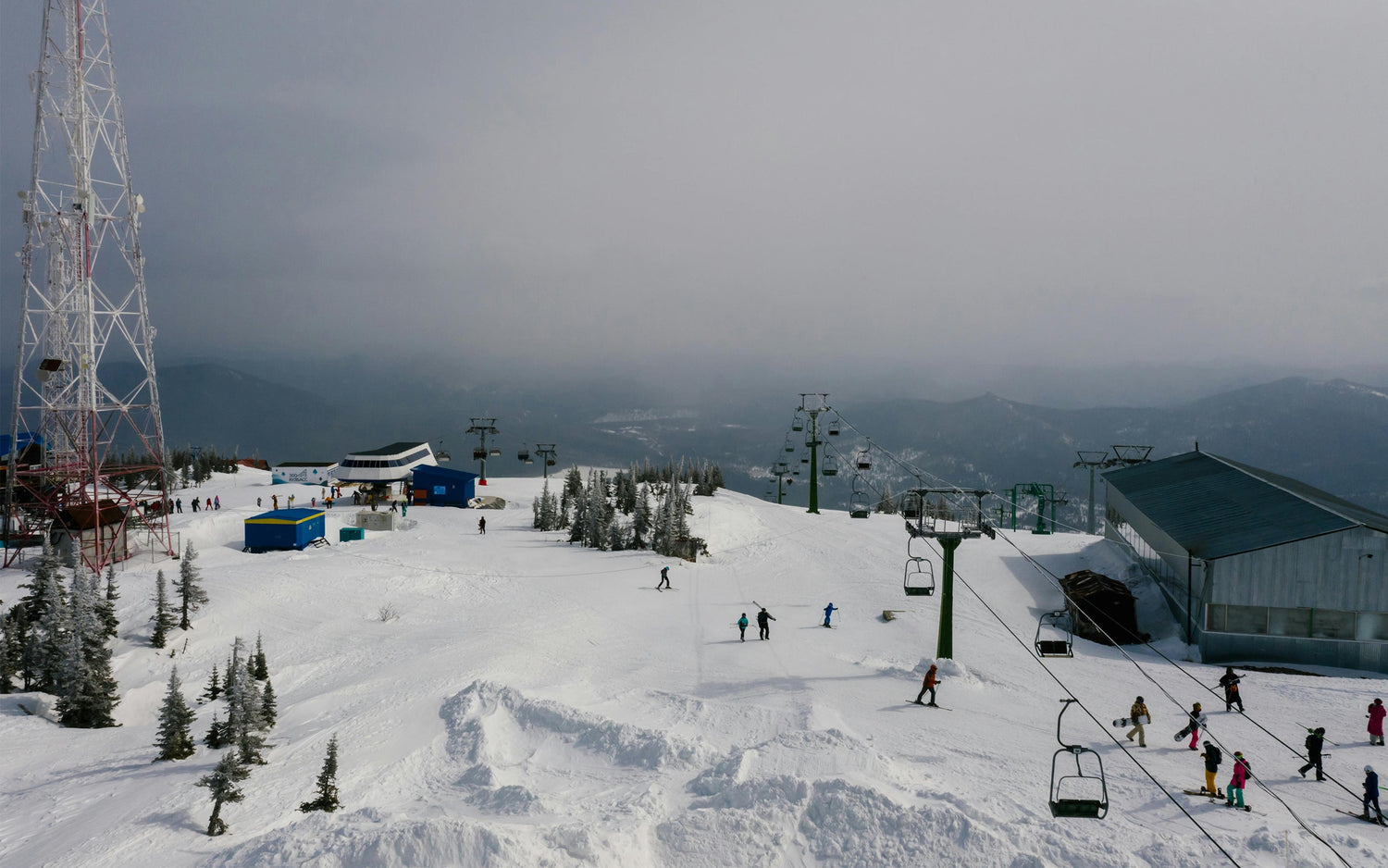
Beginner's Guide to Skiing (Basic Knowledge Edition)
Continuing from the previous section, once you have selected the appropriate skis, we can start planning your skiing journey.
Skiing is an expensive and risky sport, and most "beginner" guides focus on actual skiing techniques, often assuming that you've already been to a ski resort before. I couldn’t find the real information I wanted—most of it was too vague. There are plenty of videos on YouTube teaching you how to shovel snow, but no one tells you where to put your lift ticket.
Therefore, I’ve summarized the most basic knowledge or FAQs that beginner skiers might want to know.
1. Ski Trail Ratings
In North America, ski trails are generally rated with colors: green, blue, and black (some regions may also have red trails). The trails are rated based on their most difficult sections.

2. What is the lodge like? Can I leave my stuff there?
Lodges are all different.
When you arrive at the ski resort, you’ll quickly realize that you’ll need a locker. Most resorts offer small lockers for rent where you can store items you don’t need while skiing - such as your regular shoes, keys, wallet, and other personal belongings (trust me, dropping your keys in the snow would be a real hassle!).
Lockers are usually located near the slopes, often at the base of the ski runs. These larger lockers can hold your skis, poles, boots, and helmet. This means you don’t have to carry all your gear back to your accommodation every night. However, if you don’t rent a locker, you’ll need to bring your equipment with you to and from the resort each day.

3. About saving money while skiing
Without a doubt, skiing is an expensive sport - not only is the equipment costly, but lift tickets and transportation to and from the ski resort can also add up to a significant expense. Here are some personal suggestions that might help you save some money:
First, avoid peak seasons and go skiing during off-peak times. Choose days when there are fewer people - you might find discounts on websites, at your hotel, or even in the lobby of the lodge. Naturally, prices will be higher on weekends and during busy daytime hours.
Second, stay at a lodge or hotel close to the slopes to save on transportation costs.
Renting is a clever and mutually beneficial solution - buying a pair of skis can cost hundreds of dollars, and ski boots sit unused most of the year. Equipment owners can earn money by renting out their gear, while skiers save money by renting instead of buying.
In addition, ski clothing can also be borrowed or rented, further reducing expenses.
Finally, bring your own snacks and water bottle. Buying food and drinks at a ski resort is almost always more expensive than getting them at a local store near home.

4. About skiing lessons
If you’ve ever tried strapping your feet onto a pair of skis and moving forward, you’ll understand why taking skiing lessons is necessary. Maintaining balance is difficult, and falling is inevitable. The first challenge you’ll face is figuring out how to get up after a fall. Of course, you could unclip one of your bindings, stand up on the snow, and then reattach it — that’s the easy way, but it’s certainly not the method you want to master. This is why taking ski lessons is important: they teach you the basic techniques quickly and effectively. Of course, you can also try to learn from YouTube videos — provided that your feet are as obedient as the instructor’s in the video.
Taking lessons allows you to enjoy the fun of skiing much sooner. If you try to learn entirely by trial and error, you’ll constantly be running into problems and solving them one by one. By the time you can finally manage a smooth run on the beginner slope, your vacation might already be over — and you won’t have had much fun. Lessons also help improve your control and confidence on the slopes.
Moreover, even though ski lessons are expensive, you have to think in terms of value. A private lesson might cost around $400, while lift tickets and rentals could total about $200 per day. If you take two or three lessons, your total might reach around $1,800, after which you can truly enjoy skiing for another three to five days, spending perhaps an additional $1,000.
Without lessons, you’d still spend about $200 a day, but it might take you much longer to reach the level where skiing actually becomes enjoyable (for example, $2,800 ÷ $200 = 14 days). I doubt that two weeks of self-teaching would yield better results than professional instruction. With the same budget, you’d have less time to truly experience the joy of skiing. You might end your vacation exhausted, feeling that skiing is just a tiring outdoor activity — and on your next trip, you could still struggle just to ski parallel smoothly.
One last point: taking ski lessons allows beginners to quickly learn how to respond appropriately in emergencies, helping to better protect them from injuries.
Overall, for the sake of experience and enjoyment, I strongly recommend that beginners take ski lessons.

5. About Ski Lifts
A lift ticket is your pass to ride the cable car, and you’ll need to scan it each time you take a ride—so keep it somewhere easy to reach.

If you’re a beginner or feel nervous about taking the lift, ride with someone you know and ask them to show you what to do. Even if you end up sharing the chair with strangers, don’t worry - just tell them it’s your first time skiing. Most people are friendly and happy to help, offering tips like when to move forward or when to pull down the safety bar.
As you approach the top of the lift, you’ll see a small station ahead and signs on the poles with instructions on how to prepare for unloading. Pay attention and stay safe. Make sure your gloves or mittens are on, hold your ski poles properly, and get ready to get off. Before you reach the unloading area, lift the safety bar so you can slide off easily. Keep the tips of your skis pointed upward—this will prevent them from catching on the ground.
Once your skis touch the snow, push yourself up quickly, stand up, and move away from the chair along the small slope, either to the right or left. The lift keeps moving, so it’s important to get up and out of the way right away. The good news is that all you need to do at this point is stand up and move aside. You don’t have to start skiing immediately - just clear the lift area, take a moment to rest, adjust your gear, and get ready for your run.

6. Acclimating to High Altitudes
If you start feeling uncomfortable at high altitudes, the best advice is to drink plenty of water, get enough rest, and eat carbohydrates. Avoid drinking too much coffee or alcohol, as both can worsen altitude sickness. Since higher altitudes can easily cause dehydration, staying hydrated is crucial. If needed, check in advance whether your destination has water stations available.
7. Pre-Ski Physical Preparation
Skiing requires a strong and healthy body - but even good fitness doesn’t necessarily mean you’ll find skiing easy. That’s why beginners are encouraged to take structured lessons at local ski resorts to learn proper technique and protect themselves from injury.
Build Core Strength:
A strong core helps you stay stable and maintain control. Regular exercises like planks and Russian twists are excellent options.
Increase Leg Strength:
Strengthen your glutes and legs through squats, lunges, cycling, or jogging. These exercises will help you generate power and endurance on the slopes.
Improve Flexibility:
Good flexibility helps prevent muscle strains and injuries. Incorporate stretching into your daily routine and make sure to warm up thoroughly before skiing.
Balance Training:
Skiing demands good balance. Try exercises such as single-leg Romanian deadlifts or Bosu ball squats to enhance your stability.
Cardiovascular Endurance:
Skiing is an aerobic activity often performed at high altitudes, so strong cardiovascular health and altitude endurance are essential. Activities like swimming, cycling, and brisk walking can help you build this foundation.

I hope this guide can be helpful to beginners who are just starting their skiing journey. Wishing you a wonderful and enjoyable time on the slopes!
Disclaimer:
This article respects all intellectual property rights and is intended solely for communication and learning purposes. If any content or materials in this post involve copyright issues, please contact us for removal. The views expressed in this article represent only those of this site. If you find any errors or have suggestions for improvement, please reach out to us at service@aumtiscshop.com for correction or updates.

Оставить комментарий
Этот веб-сайт защищается hCaptcha. Применяются Политика конфиденциальности и Условия использования hCaptcha.