
Beginner's Guide to Hunting
Note: This article is intended for hunting in the United States. For other regions, it can be used as a reference.
First, let's check whether we meet the minimum hunting age requirement. Different states have different age restrictions. Below are examples from some regions for reference.
|
State |
Minimum Age |
Notes |
|
Alabama |
No minimum age |
No minimum age requirement, but a hunting license is required after age 16. Hunter education is required and can be taken starting at age 10. |
|
Alaska |
10 years old |
Hunters aged 10–17 can obtain a youth license and hunt under adult supervision. If they complete hunter education, they may hunt independently. |
|
Arizona |
10 years old |
All hunters must have a hunting license. Those under 10 must hunt small game under the supervision of an adult 18 or older. |
|
Arkansas |
6 years old |
Children aged 6–15 must be accompanied by an adult 21 or older. Hunters under 16 are not required to complete hunter education. |
|
California |
12 years old |
A hunting license is required regardless of age. Big game hunting is permitted from age 12. Those under 12 may hunt small game such as squirrels, rabbits, and upland game. |
|
Colorado |
12 years old |
Youths can obtain a hunting license starting at age 12, provided they turn 12 before the end of the season. |
|
Illinois |
No minimum age |
Must be at least 16 to hunt alone. |
|
Connecticut |
12 years old |
Youths aged 12–15 must have a junior hunting license and hunt under supervision of a licensed adult. One adult may supervise only one youth at a time. No minimum age for trapping, but those under 16 must purchase a junior trapping license. |
|
Delaware |
10 years old |
Youths aged 10–15 must hunt under the supervision of a licensed adult age 21 or older, and must have a junior hunting license. |
|
Florida |
12 years old |
Youths 12 and older may begin hunting under supervision. Those 16 and older must have a hunting license. |
|
Georgia |
12 years old |
Youths aged 12–15 must complete hunter education but do not need a hunting license. |
Having confirmed that you meet the requirements to become a hunter, it's time to get prepared for the hunt!
1. Hunting Knives (Types, Functions, and Features)
Hunters need to carry a hunting knife for field dressing and skinning game. Drop point or clip point blades are generally practical in most situations.
l Skinning Knife: Thin with a fine tip and sharp edge, designed to move under the skin without cutting it.
l Gut Hook Knife: Features a wide blade with a sharp tip to ensure a quick and humane kill.
l Dagger: Long and sharp-edged blade, used for quickly dispatching game.
l Boning Knife: Short, stiff cutting blade with a flexible tip for precise boning.
l Heavy-Duty Knife: Strong enough to withstand rough use, ideal for cutting through large animals.
2. About Crossbows
A crossbow uses the tension of a bow to launch bolts (crossbow arrows), and is widely used in hunting. In the U.S., crossbows are excluded from the Federal Firearms Act since they don’t use explosive force to discharge. However, other regulations still apply. Most states require buyers to be at least 18 years old. Some states mandate special permits or hunting licenses to carry a crossbow in the field. There may also be restrictions on usage areas and the categories of individuals allowed to use them.
Crossbows are legal in all 50 U.S. states, but if you're a beginner hunter planning to use a crossbow, you should check the specific regulations of the state you're in.
Crossbows are suitable for hunting a variety of game:
Large game: Deer, elk, moose, black bear, wild boar
Small game: Rabbits, squirrels, raccoons, and turkeys
Predators: Coyotes, bobcats
Crossbow Hunting Seasons (varies by state):
Archery Season: Crossbows are generally allowed during regular archery seasons, though a few states require a special crossbow permit.
Muzzleloader Season: Some states only allow crossbow use during muzzleloader or primitive weapon seasons.
Special Seasons: Certain states designate specific seasons for crossbow hunting.

3. About Compound Bows
Compound bows have high draw weight but require less physical strength to hold, making them suitable for beginners. They generally offer greater power and speed compared to crossbows. However, using a compound bow demands more practice and skill to master.
4. About Shotguns
Shotguns require pattern testing, as barrel wear and ammunition type can significantly affect shot trajectory. When choosing a shotgun for hunting, hunters need to select the correct choke and ammunition, as well as understand the ideal pattern distance. For example, the standard distance for clay target shooting is 21 yards, while upland bird hunting typically ranges from 30 to 35 yards.
Of course, hunting requires more gear — feel free to check out our previous article: "Hunting Gear Checklist".
First, when hunting, you need to choose a target animal and learn about its habits, habitat, hunting season, and regulations. Below are some suggestions I recommend.
Tips and Knowledge for Hunting Different Game Animals:
Deer Hunting (Clothing Colors and Behavior):
Wear neutral, earth-tone colors or camouflage patterns that match the terrain (e.g., woodland camo or desert camo) to blend naturally into the environment. Deer are colorblind — they cannot distinguish red or orange and see the world mostly in shades of blue and gray. For this reason, blaze orange is actually an ideal choice. Additionally, many areas legally require hunters to wear a blaze orange vest or hat for safety.
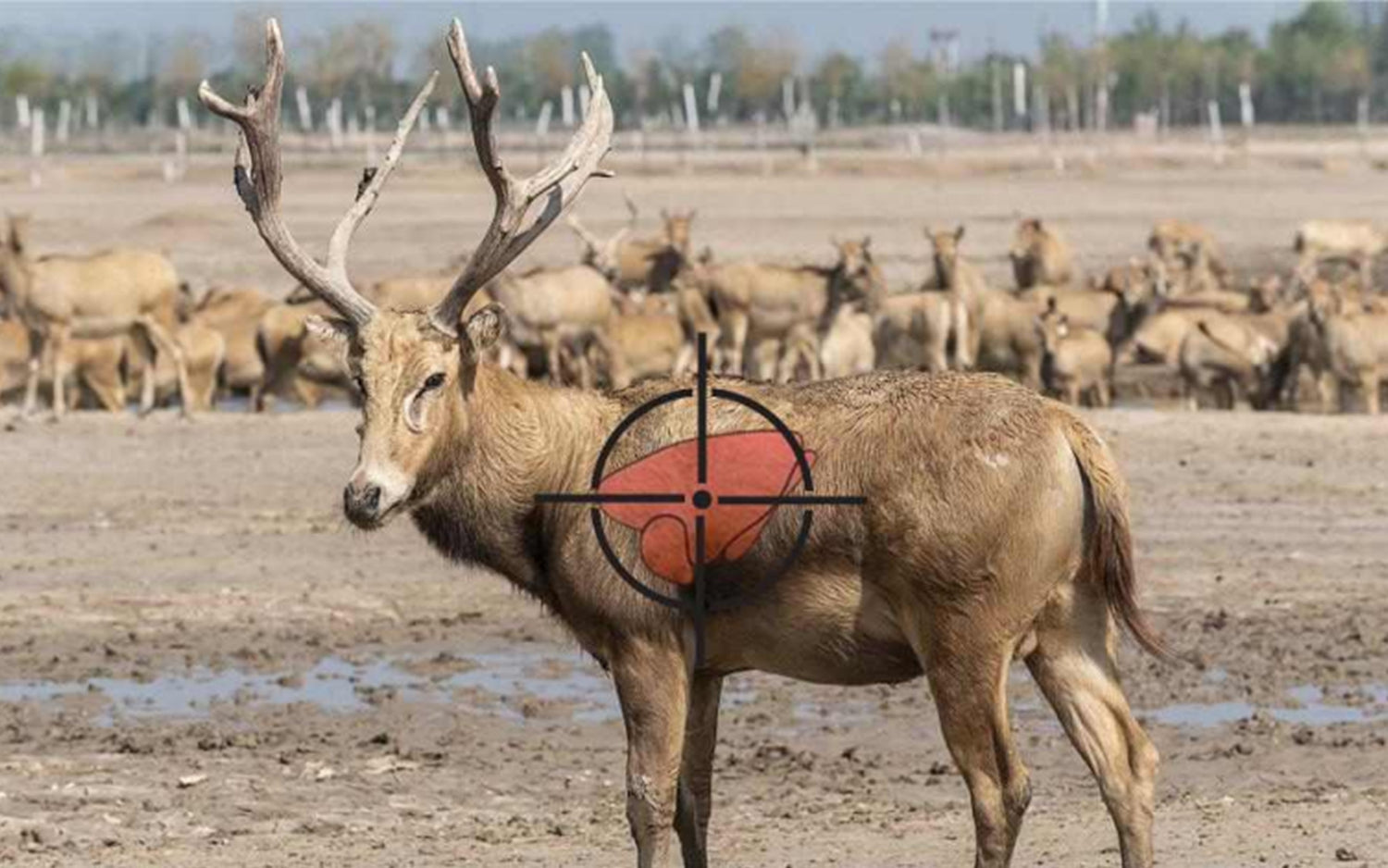
The white-tailed deer, which is found throughout the United States, is typically reddish-brown in summer and turns grayish-brown in winter. During a hunt, you can identify them by their distinctive white tail, which they raise like a flag when alarmed. Deer are most active during dawn and dusk.The ideal shot placement for a white-tailed deer is shown in the diagram below.
 The Ideal Shot Placement For a White-tailed Deer
Bear Hunting (Understanding Behavior):
Black bears can run at speeds of up to 35 mph (56 km/h) over short distances. Grizzly bears, though generally smaller than black bears, can still reach speeds of 25–30 mph (4048 km/h). For comparison, tigers run about two and a half times faster than black bears. Black bears are omnivores, with a diet that includes fruits, insects, fish, carrion, small mammals, and their favorite—honey. The best time for bear hunting is in late summer to early fall. A common hunting method is tree stand hunting, allowing the hunter to get close enough for a precise shot.
Falconry (Recommended Species):
Pass a falconry exam, learn the relevant regulations, obtain the necessary permits, and set up a proper aviary. Common falconry birds include the peregrine falcon, red-tailed hawk, and Harris's hawk. Among them, the Harris's hawk is the most beginner-friendly due to its gentle temperament.
Pheasant Hunting (Habitat):
Typical pheasant habitats include grasslands, farmland, woodland edges, and riverbanks. Pheasant hunting season usually runs from October to January, during which time the birds gather into flocks.
Turkey Hunting (Clothing Colors and Behavior):
Turkeys have excellent color vision and are very sensitive to unnatural or mismatched colors. They also have nearly 360-degree vision. To hunt turkeys effectively, avoid wearing orange, red, blue, or white. Instead, wear earth tones like brown, green, and gray. However, if local laws require blaze orange for safety, be sure to comply. The best time to hunt turkeys is early in the morning. Spring is their mating season when male turkeys respond to the calls of females. Fall is also a good time to hunt as turkeys actively search for food in preparation for winter.
Wild Boar Hunting (Recommended States):
Texas - Home to 2.6 million wild boars, accounting for nearly 50% of the U.S. wild pig population.
Florida - Offers abundant hunting opportunities.
Georgia - Wild boars are found statewide, with higher concentrations in the southern regions.
Oklahoma - The wild boar population has surged dramatically.
California - The coastal and central Sierra Nevada mountain ranges support large wild boar populations.
Elk Hunting (Recommended States):
Colorado - Home to over 280,000 elk, the largest elk population in the U.S.
Wyoming - Around 120,000 elk reside here. The Bridger-Teton and Shoshone National Forests offer excellent elk habitat. Wyoming also has low hunting pressure and plenty of public land.
Montana - About 150,000 elk live here, mostly along the Rocky Mountain Front, Bitterroot Range, and Absaroka Mountains.
Idaho - Home to roughly 120,000 elk, known for its rugged terrain. Remote wilderness areas offer higher success rates.
Arizona - Famous for its trophy-quality bulls and established elk outfitters, guides, and hunting services.
Oregon - Hosts about 120,000 elk, mainly in the Cascade and Coast mountain ranges. It also offers low hunting costs and diverse terrain.
Utah, Nevada, and New Mexico - These states have less competition for elk hunting, making them ideal for hunters who enjoy solitude.
After thoroughly learning about the animal you want to hunt, it’s time to make a plan, purchase the necessary gear, and familiarize yourself with key hunting terms and knowledge. Below, I’ve prepared a list of some common hunting terms and recommended a few hunting podcasts or shows for you.
Hunting Terminology:
Bag Limits: Maximum number of a specific game animal that a hunter is allowed to take or “bag” during a given period, such as a day.
Doe: A female deer.
Buck: A mature male deer.
Gobbler: A male turkey with a fully developed beard and spurs.
Poult: A young turkey, typically a chick or juvenile.
Roosting: The act of turkeys settling into trees or other elevated structures to sleep at night.
Hunting Podcasts and Shows:
The Hunting Public Podcast(Listen/Video): The hunting experiences and strategies of a dynamic team of hunters.
MeatEater Podcast(Listen/Video): Exploring the ethical considerations of harvesting wild game, and the connection between nature and food.
The Big Game Hunting Podcast(Listen/Video): Covers everything from wilderness hunting techniques to game conservation.
The Country Outdoors Podcast(Listen/Video): Sharing hunting experiences and reflections.
Wired to Hunt(Listen/Video): Introducing the latest strategies, tactics, and research on white-tailed deer hunting.
Elk101: Focusing on the behavior of elk, calling techniques, hunting gear selection, hunting strategies, and sharing experiences from hunters.
HuntWise: A community where enthusiasts share experiences, advice, and insights.
Head Hunters TV: It tells the adventurous experiences of traveling across the United States in search of big game, turkeys, and other hunting encounters.
Live2hunt: They travel the world, capturing exciting hunting stories and footage, while showcasing world-class animals.
If you want to hunt, in addition to focusing on completing shooting courses, make sure to familiarize yourself with the hunting season and relevant laws and regulations (such as permits, hunting limits, etc.). Ask yourself if you are ready to endure the challenges (hunting environment, food scarcity, physical exertion). If hunting on public land, and you encounter other hunters in the field, I recommend following the "first come, first served" principle or negotiating how to divide the area. Of course, I suggest preparing a Plan B and planning your trip in advance. Finally, I wish you a pleasant and successful hunting experience.
Disclaimer: This article respects the intellectual property rights of all parties and is provided solely for educational and communication purposes. If any content or materials on this website are found to infringe upon copyrights, please contact us for removal. Additionally, this article represents the views of this website only. If there are any errors or omissions, please contact us at service@aumtiscshop.com for adjustments.

Оставить комментарий
Этот веб-сайт защищается hCaptcha. Применяются Политика конфиденциальности и Условия использования hCaptcha.